
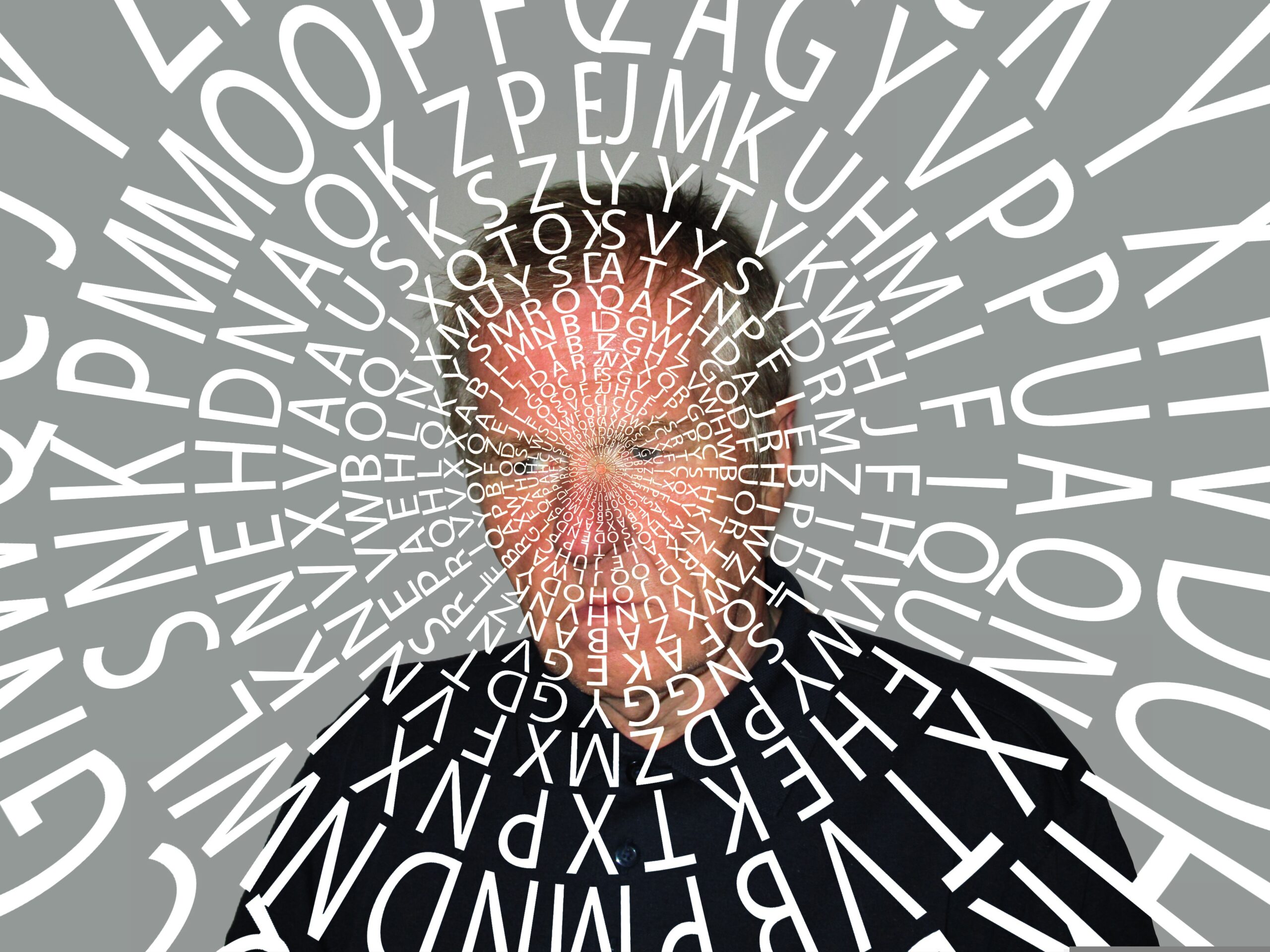
Your Attention Is Under Attack — And It’s Not Your Fault
How the attention economy is reshaping your personality, and what you can do about it.
Here’s a question that sounds simple but isn’t: When was the last time you held a single thought for five uninterrupted minutes?
Not a conversation. Not a task that required constant input. Just one thought, held in your mind, explored from multiple angles, without your attention being pulled away by a notification, a tab, an impulse to check something.
If you can’t remember, you’re not alone. And you’re not broken. But something is happening to you, and it’s worth understanding.
The Attention Economy Isn’t a Metaphor
When people talk about the “attention economy,” it can sound abstract — a buzzword for think pieces and TED talks. But the mechanics are concrete and measurable.
Every major technology platform generates revenue by capturing and holding human attention. The longer you stay on the app, the more ads you see, the more data you generate, the more money the platform makes. This means that the smartest engineers and behavioral scientists in the world are employed full-time to make their products as compelling — which often means as addictive — as possible.
Infinite scroll eliminates natural stopping points. Autoplay removes the need to make a conscious decision to continue. Notification systems are calibrated to trigger dopamine anticipation. Content recommendation algorithms learn what triggers your emotional responses and serve you more of it. Not because anyone is trying to hurt you, but because engaged users are profitable users, and emotional arousal is the most reliable driver of engagement.
This isn’t a conspiracy theory. It’s a business model. And in 2026, with AI-powered content personalization becoming exponentially more sophisticated, the precision with which platforms can capture and hold your attention has reached a level that would have been unimaginable a decade ago.
What Attention Loss Actually Costs You
The cost of chronic attention fragmentation goes far beyond “I waste time on my phone.” It restructures the way you think, relate, and make decisions.
Cognitive cost: Research in neuroscience consistently shows that task-switching — what most people experience as “multitasking” — degrades the quality of thinking on every task involved. Each time your attention shifts, there’s a switching cost: a brief period where your brain is disengaging from one context and loading another. When this happens dozens or hundreds of times per day, the cumulative cognitive toll is significant. You lose depth. Complex thinking becomes harder. Nuance gets replaced by surface-level reactions.
Identity cost: You become what you repeatedly attend to. This isn’t philosophy — it’s neuroscience. The neural pathways you use most frequently become stronger, while the ones you neglect weaken. If you spend hours every day attending to short-form content, outrage cycles, and comparison triggers, those become your default cognitive modes. Your personality begins to mirror your media diet: reactive, fragmented, and stimulus-dependent.
Relational cost: When you can’t hold attention in a conversation, the people around you feel it. Children feel it when their parent is physically present but mentally scrolling. Partners feel it during dinner when the phone sits face-up on the table. Colleagues feel it in meetings when eye contact keeps dropping to a screen. Attention is, in many ways, the most honest form of love and respect. And we’re distributing it to algorithms instead of humans.
Emotional cost: Chronic attention fragmentation keeps your nervous system in a state of low-grade activation. Each notification, each context switch, each new piece of information triggers a small stress response. Individually, these are negligible. Cumulatively, over a day, a week, a year, they contribute to the baseline anxiety and exhaustion that so many people now consider normal.
Dopamine Isn’t Your Enemy — Misdirected Dopamine Is
Dopamine gets a bad reputation in popular wellness content. People talk about it as if it’s the villain — the chemical responsible for addiction, distraction, and poor choices. But dopamine isn’t inherently destructive. It’s a neurotransmitter involved in motivation, learning, and reward anticipation. Without it, you wouldn’t get out of bed in the morning.
The problem isn’t dopamine itself. The problem is that the modern environment has hijacked your dopamine system and redirected it toward activities that provide instant gratification but no lasting satisfaction. Social media likes, viral content, online shopping, notification checks — these all trigger dopamine release. But they do it in a pattern that trains your brain to seek novelty over depth, consumption over creation, reaction over reflection.
Over time, this creates a dopamine tolerance pattern similar to what we see in substance dependency: you need more stimulation to feel the same level of engagement. Books feel boring. Long conversations feel effortful. Anything that doesn’t provide immediate feedback feels intolerable. Not because these things have lost their value — but because your brain’s reward system has been recalibrated by thousands of hours of engineered stimulation.
The Morning Attention Protocol
Reclaiming your attention doesn’t require a digital detox, a cabin in the woods, or swearing off technology permanently. Research suggests that abstinence-only approaches to screen use are generally unsustainable and miss the point. The goal isn’t to eliminate technology. It’s to become intentional about what gets your attention and when.
Here’s a simple protocol that can begin to shift your attention baseline:
The first 30 minutes of your day are a protected zone. No phone. No email. No news. No social media. This is non-negotiable.
Use those 30 minutes for one or more of the following:
- A physical practice (walking, stretching, exercise)
- A reflective practice (journaling, meditation, coherence breathing)
- A creative or strategic practice (writing, planning, thinking about one important problem)
Why the morning? Because your brain’s cognitive resources are at their peak after sleep. The neural networks that handle executive function, creative thinking, and emotional regulation are fully charged. If the first thing you do is hand that capacity over to an algorithm, you’ve given away your best cognitive hours to someone else’s agenda.
After the protected zone, use a simple framework for the rest of the day: before you open any app or platform, state your intention. “I’m opening Instagram to check messages from three specific people.” “I’m opening YouTube to watch one specific video.” “I’m opening email to respond to two specific threads.” This transforms consumption from passive to active. It puts you back in the role of curator rather than consumer.
What Happens When AI Becomes Your Default Thinking Tool
This conversation is about to get more urgent. As AI tools become increasingly integrated into daily life — writing your emails, summarizing your research, making your decisions — there’s a new dimension to the attention question that we need to take seriously.
AI saves effort. That’s its selling point. But effort is not waste — effort is how thinking happens. When you outsource the effort of organizing your thoughts, constructing an argument, or working through a complex problem, you save time. But you also skip the cognitive process that develops judgment, deepens understanding, and builds intellectual resilience.
This isn’t an anti-technology argument. AI is a powerful tool. But tools shape the people who use them. A generation that defaults to AI for thinking is a generation that may develop excellent consumption skills and deteriorating judgment skills. And judgment — the ability to assess, weigh, and decide under uncertainty — is precisely the human capacity that matters most in an uncertain world.
The protocol here is deliberate: use AI to amplify your thinking, not replace it. Use it after you’ve formed an initial opinion, not before. Use it to check your work, not to do your work. Use it as a consultant, not as your brain.
Taking Your Attention Back
Your attention is the most valuable resource you have. It determines what you learn, who you become, what you create, and how you connect. In an economy that treats your attention as a commodity to be harvested, protecting it is an act of self-determination.
You don’t need to become a monk. You need to become a curator. Decide what gets your attention. Decide when it gets your attention. Decide how long it gets your attention. These are not trivial choices. They are, in aggregate, the choices that shape your life.
You become what you repeatedly notice. Make sure what you’re noticing is worth becoming.
No responses yet